SUNDAY · OCTOBER 25, 2026NEW YORK · AN EDITED DAILY BRIEFING

Your Daily

✦

News, sports, culture and discoveries

01

Tonight & the next 24 hours

TIME (ET)EVENTWATCH
5 p.m.🎭 Wayfinding: Señas del Camino · People's Theatre at the Whitney · free; registration requiredDetails
7 p.m.🏀 Orlando Magic at New York Knicks · Madison Square GardenMSGN
02

The big story

WESTERN NEW YORK · SENECA HISTORY · THE LAND BENEATH THE MAP

Where the Forest Went

Longreads' photographic collage of a green forest divided into a white survey grid
The gridded forest illustration accompanying James Whorton Jr.'s original Longreads feature, reproduced here as a linked editorial image. Source: Longreads.

In 1788, Hugh Maxwell was sent to turn an immense stretch of Seneca country into surveyed parcels that speculators could sell. More than two centuries later, a writer went looking for the route—and found that its lines still organize the landscape.

James Whorton Jr. begins in his own Brighton neighborhood, where the history of racially restrictive real-estate covenants takes him backward to the original purchase. A deed links his suburban street to Phelps and Gorham, and the trail leads to Maxwell's notebooks: mile after mile of trees, stream crossings, lots and township corners.

Maxwell's inventory treated the land as an opportunity for future settlement, even when he passed fields and the remains of Seneca towns. Whorton reconstructs the agricultural, ecological and political world the grid obscured, including the destruction of Kanadesaga in 1779 and the continuing presence of Seneca people.

Retracing the survey on foot, he finds the altered forest still living within a town of roads, homes, fences and suburban commerce. A strip of brightly colored surveyor's tape finally leads him to a concrete marker at a township corner where Maxwell once hacked a Roman numeral into a basswood tree.

The achievement is both literary and investigative: Whorton makes familiar geography strange again without pretending the pre-colonial landscape was an untouched wilderness.

03

Three more worth reading

A bone chapel · a cross-border literary fraud investigation · a major streaming-rights decision

01
ESSAY · THE CZECH REPUBLIC

Charnel Heart: What a Chapel of Bones Reveals About Living

The Sedlec Ossuary outside Prague seems to promise an encounter with mortality on its own terms. For Kristin Idaszak, who first visited years earlier, a life-threatening cardiac illness changes that expectation. She returns to an eerie place of skulls, elaborate bone arrangements and restoration work and finds herself thinking as much about survival and the banal business of living as about death.

There are many travel pieces about strange churches. This one is worthwhile because the writer's altered relationship to the place becomes the story, without collapsing it into a tidy moral.

02
INDIA · CROSS-BORDER INVESTIGATION

When a Fake Book Club Tried to Scam a Fraud Reporter

A flattering invitation to discuss an old book was the first sign. When the correspondent began asking for money, Poonam—who has spent a decade investigating transnational fraud—started investigating the pitch itself. She followed impersonated identities and fake literary services toward an organized economy selling status and visibility to vulnerable writers.

The story is much bigger than one suspicious email: it is about how globalized scamming businesses identify ambitions and manufacture promises around them. The reporting, not just the hook, earns its place.

03
MEDIA RIGHTS · DISTRIBUTION · PROFESSIONAL LACROSSE

The NLL Is Leaving ESPN for FloSports. Can a Specialist Platform Grow the Game?

The National Lacrosse League says FloSports will become its exclusive global streaming partner for the coming season, launching a dedicated FloLacrosse channel on November 5. The deal includes the regular season, playoffs and marquee league events. FloSports also plans an NLL Saturday Showcase and the 2027 Finals on its free ad-supported FloSports Channel through distribution partners including Prime Video and YouTube.

The bigger story is about whether a specialized, year-round lacrosse platform can expand the sport's audience, or make it harder for casual viewers to find the games. For Buffalo Bandits fans, the concrete change is where to watch their club. The report does not establish subscription pricing, audience growth or whether the deal improves the league's economics.

Mamola also notes that the announced term is 'multiyear' without a disclosed length or financial value, and details of 18 national broadcasts remain unspecified. That's a useful media-business story even without pretending to know its outcome.

04

Zooming in

Upper Manhattan culture · New York's working arts infrastructure · urban history and street design in Boston and Toronto · media innovation

QUEENS · FILM & TELEVISION PRODUCTION

The Vanishing Warehouse That Helped Build Thousands of Fictional Worlds

Eclectic/Encore Props, a 95,000-square-foot rental warehouse in Long Island City, is closing after decades supplying furniture and objects for film, television, theater and advertising. Suri Bieler began the business in 1979 with just $175. The showroom grew into a vast labyrinth of themed rooms—everything from period settings to nautical fantasies.

It's an unusual window onto the city's creative infrastructure. Actors and directors get public recognition; prop houses preserve physical culture, lend atmosphere to productions and make sets possible. Losing one means more than another warehouse changing hands.

Frishberg's story takes readers inside the extraordinary collection while the business still exists—a vivid piece of NYC history worth capturing before it disappears.

Furniture, lamps and colorful props fill Eclectic Props' large showroom in Long Island City
Eclectic Props' own photograph of its Long Island City showroom. Photo: Eclectic Props.
INWOOD · ARTISTS FROM THE NEIGHBORHOOD

A Theater Built for Its Neighbors, With Its Neighbors on Stage

Inwood's new People's Theatre: Centro Cultural Inmigrante is more than a performance venue. Its community production Wayfinding: Señas del Camino, led by Colombian director Catalina Beltrán, turns the lived experiences of eight mostly immigrant performers from Washington Heights and Inwood into three intertwined stories of escape, survival and discovery. Beltrán describes a theater-making process that starts with the participants' ideas, not a script imposed on them.

A rare Sunday opportunity: The ensemble performs at the Whitney Museum on October 25 at 5 p.m. ET. Admission is free, but advance registration is required and capacity is limited.

BOSTON & TORONTO · TWO DISTINCTIVE STORIESIndependently reported · published by October 25
IMMIGRATION · HARBOR HISTORY · PUBLIC ART

East Boston Reclaims the History Hidden in Its Waterfront Steps

The 58 concrete steps above the East Boston piers aren't just a local runner's challenge. A century ago, thousands of immigrants climbed them after leaving arriving ships. A new illuminated arch, called Arrival, begins the Golden Thread, a public-art trail designed to tell the neighborhood's overlapping histories of immigration, shipbuilding, transportation and grassroots organizing. The project was formally unveiled October 24.

Historian Daniel Berger-Jones retraces the old waterfront arrival route, including a detention station that was demolished in 2011. Other installations recognize the first underwater streetcar tunnel, opened in 1904; East Boston's clippership yards; and the organizing that followed airport expansion. A fifth installation, about adaptation and future flooding, wasn't yet installed in the October 22 report. The story uses public art as a way to recover history that's largely vanished from the physical landscape.

The five themes of the Golden Thread. *The adaptation installation was not yet in place when GBH reported the story. This is an original editorial diagram, not a rendering of the arches.

STREET SAFETY · PROTEST · PROVINCIAL POWER

On Bloor Street, Cyclists Are Physically Blocking the Removal of Bike Lanes

On Bloor Street West in Etobicoke, the Ontario government is removing a stretch of protected cycling lanes despite determined resistance from cyclists. Gillies reported from an extraordinary October 20 confrontation: demonstrators wore respirators as a pavement-milling machine threw up clouds of asphalt dust, while protesters tried to slow the removal. Four people had been arrested during the broader standoff by the time of his report.

The provincial government argues that restoring traffic lanes will relieve congestion; the protesters say dismantling protected infrastructure puts cyclists at risk and undermines local transportation planning. This is a concrete fight over the design of a street, and a revealing test of which level of government can decide its future.

ARGENTINA · JOURNALISM & DIGITAL PRODUCTS

A New News Habit, Built as a Personalized Audio Briefing

Two young developers in Argentina created Lisa AI, a tool that turns attributed news stories into personalized spoken briefings. The early app-store traction is interesting, but the more important experiment concerns whether people who discover news through a listening interface will follow the original journalists and publications behind it.

05

Sports

World Series reaction · Syracuse's ACC breakthrough · Sabres analysis · Knicks tonight · WNBA Finals · Bills

⚾ WORLD SERIES · GAME 2 · MILWAUKEE LEADS 2–0

How Milwaukee Turned a Four-Run Deficit Into a Two-Game World Series Lead

Saturday began disastrously for Cooper Pratt: his error helped Tampa Bay put up four first-inning runs. The Rays had ace Drew Rasmussen on the mound and a relatively rested bullpen. Yet Milwaukee chipped away, Sal Frelick tied the game with a sixth-inning homer, and Pratt became the winning-hit hero with a seventh-inning RBI single.

The storybook reversal: Clemens studies the play that opened the floodgates and the later at-bat that redeemed Pratt, without reducing the game to a lesson in redemption. The details of both plays are more interesting than the coincidence alone.

The Rays' missed advantage: Shusterman traces how Rasmussen's command faltered and Tampa Bay's bullpen advantage proved fleeting. The Brewers' approach keeps pressuring opposing pitchers through difficult at-bats; the Rays' defensive and baserunning lapses have made those extra chances more costly.

What comes next: Game 3 moves to Tampa Bay on Monday, October 26, at 8 p.m. ET on FOX. Freddy Peralta is scheduled to face the team that traded him. Tampa Bay still has a path back, but it needs cleaner play and more effective relief innings.

🏈 SYRACUSE FOOTBALL · AN ACC LOSING STREAK ENDS

One Point, One Freshman, and a Victory Syracuse Desperately Needed

Syracuse came into Chapel Hill carrying an 11-game losing streak in ACC play. It fell behind 10–0 in the first quarter, trailed 20–10 in the third, and still had not led when North Carolina took the first possession of overtime. What followed was one of the Orange's most dramatic wins in years.

The comeback began with Umari Hatcher's 76-yard touchdown reception early in the fourth quarter. Ahmad Miller repeatedly gave Syracuse manageable situations on the ground, rushing 30 times for 125 yards. Tylik Hill's three-yard touchdown run with 1:54 remaining tied the game at 23—but Shay Barker missed the extra point that would have given Syracuse its first lead.

Syracuse then escaped a dangerous UNC possession with a fourth-down sack. In overtime North Carolina scored first, putting the Orange behind 30–23. Steve Angeli faced third-and-long and took a hit while completing a crucial throw to Calvin Russell III. Angeli went back to the true freshman for a four-yard touchdown, and then the winning two-point conversion. Russell, returning from an Achilles injury, finished with eight catches for 86 yards.

There is no reason to disguise the remaining problems: seven Syracuse penalties, another missed PAT, and long offensive droughts. But the emerging chemistry among Angeli, Russell, Hatcher and Miller changed the outcome, while the defense gave the offense a chance after the kicking mistake. It was a result this roster had to prove it could secure.

Next: No. 23 SMU at Syracuse on Saturday, October 31, at noon ET. The historical significance is the streak ending; the question for the week ahead is whether Syracuse can sustain the aggressive late-game approach against another ACC opponent.

OCTOBER 24 · CHAPEL HILL · OVERTIMEORANGE 31 — 30 TAR HEELS
20–10UNC leads in Q3
76 ydHatcher's Q4 touchdown
23–23Hill ties it; PAT missed
31–30Russell: TD + 2-point catch
Original scoring sequence based on independent game reports by Christian De Guzman and Kevin Wall.
🏒 SABRES · A FAMILIAR COLLAPSE IN WASHINGTON

A 2–0 Lead, a Terrible Second Period, and Alex Tuch's Overtime Winner

Buffalo opened Saturday night in Washington with exactly the start it has been seeking. Jack Quinn scored his team-leading sixth goal; Josh Doan made it 2–0. The forecheck was active, and the Sabres appeared ready to control the game. Instead, the final result was Capitals 4, Sabres 3 in overtime.

The first Washington goal came on a Tuch centering pass deflected off skates and Tage Thompson's stick. Dylan Strome scored twice in the second period, the stretch in which Buffalo's structure again deteriorated. Noah Östlund's third-period deflection tied the game, and two subsequent power plays gave the Sabres chances to win without overtime.

The final shift was especially cruel: Zach Benson was stopped on a partial breakaway; moments later, Dylan Strome found former Sabre Alex Tuch alone in the slot. Tuch, traded to Washington in June, beat Ukko-Pekka Luukkonen at 3:42 of overtime for his second goal of the night.

Paul Hamilton's point is structural, not sentimental. Early in this season Buffalo has repeatedly found itself trailing entering the third period, and the second period has been particularly destructive. An overtime point papers over the damage only if the team is genuinely correcting its coverage and puck management. Quinn's offense is a bright spot; his defensive positioning on the decisive play illustrates the other side of the challenge.

Buffalo is 4–4–3 through 11 games. The immediate test isn't whether the club can 'bounce back' emotionally, but whether it can stop giving away the middle frame.

🏀 KNICKS · GAME DAY · 7 P.M. ET / MSGN

The Defending Champs Are 0–2. Orlando Is Missing Its Biggest Star.

For the first time since the 2011–12 Mavericks, a defending NBA champion has opened with two losses. The Knicks' losses to Philadelphia and Boston expose a less reassuring trend than the record: their offense is inconsistent and Mikal Bridges is 2-for-16 from the field, including a scoreless night against the Celtics.

Orlando arrives just as winless, and without Paolo Banchero, sidelined by a high ankle sprain. That changes the frontcourt balance, but Franz Wagner, Desmond Bane and Jalen Suggs can still punish poor rotations. New York's best route is to make its rebounding and interior advantage count while getting Brunson cleaner creation opportunities.

Mike Brown publicly backed Bridges after Friday's loss, saying he should continue taking available shots. This is a meaningful early test of whether the Knicks can improve execution without losing confidence in the core that won last season's title.

Tonight: Magic at Knicks, 7 p.m. ET, Madison Square Garden. The local broadcast is MSGN.

🏀 WNBA FINALS · GAME 4 ANALYSIS

The Rotation Change That Helped Golden State Level the Finals

After a 26-point Game 3 defeat, Valkyries coach Natalie Nakase replaced Cecilia Zandalasini and Kayla Thornton in the starting lineup with Tiffany Hayes and Kaila Charles. The deeper shift was defensive: Golden State crowded Angel Reese, sometimes deployed a 2–3 zone, and kept Atlanta from controlling the paint.

Kiah Stokes had 16 rebounds and three blocks; Gabby Williams scored 17. Most revealingly, the Valkyries cut their turnovers to nine after 35 combined in Games 2 and 3. A 42–26 halftime lead survived Atlanta's late rally for a 67–62 win, tying the series 2–2.

This is now effectively a best-of-three. Game 5 is Monday, October 26, at 8 p.m. ET in San Francisco; that future game belongs in the advance line, not Sunday's schedule.

🏈 BILLS · ANALYSIS IN THE BYE

Is Buffalo's Pass Defense Really That Bad? A Better Way to Ask

Buffalo is off Sunday. Chris Trapasso's new Defensive Impact on Passing metric compares what a quarterback produces against a defense with the same quarterback's EPA per dropback against the rest of the league. That correction matters when one team has faced a much more punishing sequence of passers than another.

By his calculation, the Bills rise only modestly—from 25th in ordinary passing EPA allowed to 23rd after adjusting for the caliber of quarterbacks faced. In other words, a tougher schedule explains some, but not nearly all, of the defensive concern. The metric has limitations, including the available sample and the choice of baseline; it's an independent analytical experiment rather than a league statistic.

Bruce Nolan's separate coverage study offers a concrete explanation: compared with 2025, the Bills are playing heavier personnel, more Cover 3 and Cover 4, less press coverage, and fewer distinct coverage looks. Communication failures have still produced explosive completions. The two analyses distinguish scheduling difficulty from scheme and execution, rather than assuming one simple cause. Next: Baltimore at Buffalo, Sunday, November 1, 1 p.m. ET.

🏀 SYRACUSE MEN'S BASKETBALL · EXHIBITION REACTION

The Orange Beat Niagara. McNamara Didn't Like What He Saw.

Syracuse finished its exhibitions by beating Niagara 71–58 at Buffalo's KeyBank Center, but its 20–4 start obscured a warning. The Purple Eagles cut the margin to four in the second half and forced the Orange into stretches of tentative decision-making.

Gerry McNamara's complaint was specific: Syracuse was repeatedly bothered by one offensive action and was beaten 14–7 in the turnover battle. He wanted more disruption on defense, better shots and a more reliable response when opponents break the rhythm of the game.

The result does not forecast the entire season, but it identifies a concrete coaching problem days before McNamara's first regular-season opener against New Haven on November 2. How quickly the team translates those exhibition lessons into disciplined possessions will be worth watching.

06

Travel, food & drink

WHISKEY & A RIVER · AN AUTUMN COCKTAIL · A ROMAN RESTAURANT

KENTUCKY · MISSISSIPPI RIVER · THE SCIENCE OF AGING SPIRITS

Bourbon Aging on Barges in the Mississippi River

At the Ingram Distillery in western Kentucky, some 6,000 barrels of whiskey and bourbon age inside two barges moored on the Mississippi. Saad reports from the floating warehouses, where the distiller believes river movement and shifting humidity and temperatures influence maturation. The story is especially interesting as a physical experiment: an unusual aging environment isn't automatically proof of different flavor, and the reporter allows that distinction to stand.

This older but worthwhile feature also suggests a distinctive travel stop near Columbus-Belmont State Park—not another standard bourbon-trail tasting room.

07

Arts & culture

IRELAND · PLANXTY · THE PEOPLE WHO CHANGED FOLK MUSIC

Andy Irvine, Dónal Lunny and the Art of Making a Band

Andy Irvine is 84, rehearsing Woody Guthrie songs in the basement of a Dublin pub and getting ready to go on tour again. His long conversation with Patrick Freyne becomes something more moving because Dónal Lunny—the bouzouki player and arranger who helped define Planxty and the Bothy Band—died two days earlier.

Irvine is funny and remarkably candid about teenage enthusiasms, working-class musicians he befriended in London, hitchhiking across Europe and learning to hear new possibilities in the Irish tradition. His memories of Lunny explain how a group of formidable players could become something greater than its parts.

The music is still alive in the interview, not embalmed as history. Irvine's devotion to Guthrie and radical songwriting forms a thread from midcentury American folk to Irish trad and forward again.

Read Patrick Freyne's interview · Read the Dónal Lunny obituary

Archival black-and-white portrait of three members of Planxty from the 1970s
Archival Planxty group portrait. The Balladeers collection; image linked to its source.
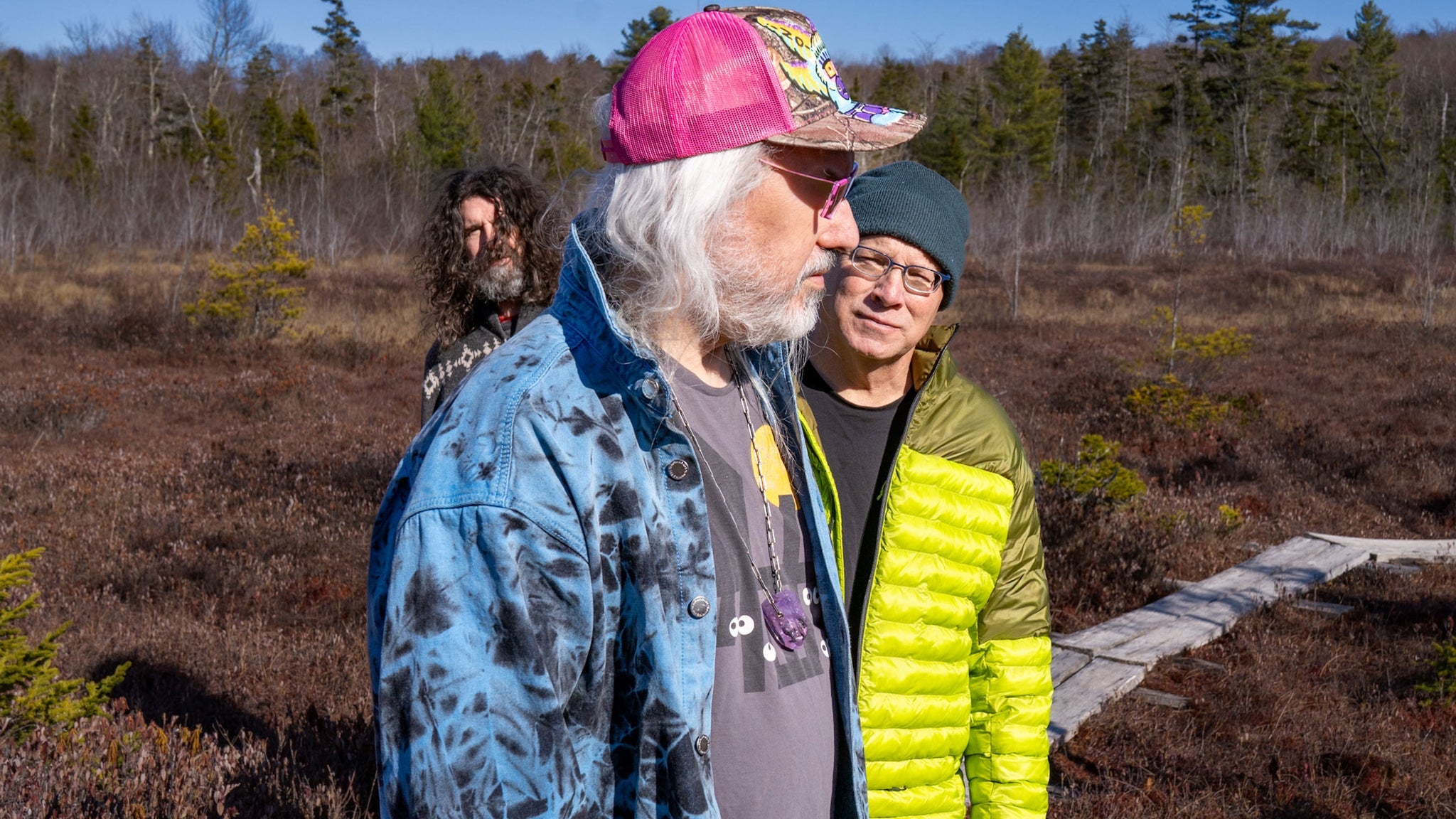
Dinosaur Jr members J Mascis, Lou Barlow and Murph in a 2026 tour photograph
Dinosaur Jr, 2026 tour promotional photograph. Read the independently reported Pitchfork interview; photo via Live Nation.
INDIE ROCK · FOUR DECADES OF UNEASY CHEMISTRY

How Dinosaur Jr. Learned to Tolerate Each Other. Sort Of.

Grayson Haver Currin spent seven hours interviewing J Mascis on Cape Cod and spoke with Lou Barlow, Murph, Kim Gordon and others who have watched Dinosaur Jr. endure. The three musicians remain an awkward social unit. But their shared language of distorted guitar, high-register bass and drumming keeps pulling them back together.

The piece is exceptionally good on the paradox of band chemistry: an enduring creative partnership that has never required the members to be close friends. Mascis discusses fatherhood, anxiety, an almost lifelong attachment to playing guitar and the reunion that nobody expected to last 21 years.

FILM & TELEVISION HISTORY · ROCHESTER

Bea Arthur, Beyond the Television Persona

Dan Watt, who served as Bea Arthur's personal assistant, has built a documentary around a rare interview with the notoriously private actor. He describes the compassion and theater training behind her television image. The article links her Broadway career to her support for LGBTQ+ young people, including the New York residence bearing her name.

The documentary is scheduled for Rochester's Little Theatre on October 28, part of a limited tour—a concrete culture discovery, not another routine streaming recommendation. Read the Beacon's interview and screening details.

08

What to see, watch & hear

LISTEN · THE RECORD THAT STARTED IT

Planxty — Planxty (1973)

The original quartet—Andy Irvine, Dónal Lunny, Christy Moore and Liam O'Flynn—combines vocal and instrumental traditions into something that still feels alive. After reading Irvine's interview, focus on Lunny's rhythmic bouzouki pulse beneath the melody rather than trying to absorb the whole history at once.

LISTEN · A DIFFERENT FORM OF THE SAME GENIUS

Andy Irvine and Paul Brady (1976)

A specific album, not a catalog search. The 1976 duo recording also features Kevin Burke and Dónal Lunny; try “Plains of Kildare,” then the spare, emotionally charged interplay on “Lough Erne Shore.” It is a better companion to the interview than repeating a recommendation for Irvine's newest project.

REPERTORY CINEMA · TODAY

Ozu's An Autumn Afternoon at Metrograph

Yasujirō Ozu's final film gets a Sunday screening on October 25 at 1:10 p.m. ET, in DCP. A measured family drama whose restrained style carries the emotional weight. Worth knowing about while the program is running; verify remaining tickets with the theater.

09

The last edit

NARRATIVE CRAFT · EARL SWIFT

What the Story Doesn't Need

Earl Swift hiked the Appalachian Trail twice, decades apart, to research Up on Cove Mountain. In a conversation with Brendan O'Meara, he says that the hardest part was cutting: roughly three months spent removing material. His distinction is between moments that genuinely carry a narrative and episodes that simply happened. The reader needs hierarchy and momentum, not an exhaustive log of everything the reporter discovered.

This issue was reconstructed retrospectively on October 29, 2026, using reporting available by midday October 25. It is not a recovered original. The approved October 28 design was preserved; reportage and visuals are linked to identifiable sources.