WEDNESDAY · OCTOBER 28, 2026AN EDITED DAILY BRIEFING
YourDaily
✦
News, sports, culture and discoveries
01
Tonight & the next 24 hours
TIME (ET)EVENTWATCH
3:45 p.m.⚽ Aston Villa at Bournemouth · League CupParamount+
8 p.m.⚾ World Series, Game 5 · Brewers at Rays · Milwaukee leads 3–1FOX
8 p.m.🏀 Knicks at BullsMSG
Today📺 Brothers, Episode 7: “The Interview”Apple TV
10 p.m.📺 New South Park: “Guinea Pig on a Stick”Comedy Central
WORTH PLANNING FOR: Thursday's WNBA Finals Game 6 starts at 12:30 p.m. ET on USA Network and Peacock. Golden State leads Atlanta 3–2 and can claim its first championship.
02
The big story
JOURNALISM · ARTIFICIAL INTELLIGENCE · THE AUDIENCE
News organizations have spent decades trying to build direct relationships with readers. A new report asks what happens when the reader's principal relationship is instead with an AI assistant—and the journalism becomes a source of material for answers assembled somewhere else.
Laura Hazard Owen examines The Three-Layer Cake, a report by Gina Chua and Adiel Kaplan from CUNY's Tow-Knight Center for Journalism Futures. Its central idea is that the familiar newsroom hierarchy is being inverted. Editors no longer necessarily determine which finished package a reader receives. A person asks a question, an intermediary assembles an answer, and original reporting becomes one ingredient.
The report distinguishes three functions: products that learn what people want to know, systems that synthesize responses, and organizations that produce the underlying facts and reporting. A publisher may excel at the third—and still lose control of the first two.
That's a sobering proposition for investigative journalism. A newsroom might spend months producing a story, only for its most valuable findings to be summarized within minutes. The work's public value can remain enormous even as its direct economic return becomes harder to capture.
But the authors also see a genuine opportunity. AI could answer highly specific questions for people and communities whose information needs were previously too narrow to sustain a conventional news assignment: what a school budget cut means for one child's art class, for example.
Their prescription is not to abandon reporting. It is to make hard choices about which expertise, services and community relationships cannot easily be duplicated—and to think seriously about who builds and governs the systems that connect people with trustworthy information.
One of the report's sharpest questions concerns the information people reveal when they ask for news. The intermediary learns what interests readers, what troubles them and what they still don't understand. Who has access to that knowledge—and whose interests does the intermediary ultimately serve?
The critical question isn't whether an AI system can summarize a newspaper article. It's whether a publisher can continue to fund important journalism when its relationship with the people who benefit from that work has become indirect.
Nick Bowlin · ProPublica / The Frontier · October 27
Oklahoma's oil regulator has documented more than 1,000 pollution incidents and other violations involving Citation Oil & Gas over the past decade. Yet the agency has no record of completing an enforcement case against the company or imposing a fine.
The investigation is particularly revealing about what happened inside the Oklahoma Corporation Commission.
In 2023, regulators were investigating eruptions of toxic wastewater in an oil field near Ardmore. Agency staff and outside consultants concluded that excessive pressure from injection wells was contributing to the pollution. Federal officials had warned about potential threats to drinking water.
Staff recommended enforcement. Their superiors instead negotiated terms allowing Citation to resume injection at pressures higher than consultants had recommended.
Another enforcement case was drafted but never approved.
Current and former employees describe an agency concerned that Citation might abandon aging, low-producing wells, leaving the state responsible for costly cleanup. The company disputed regulators' conclusions about the pollution's source.
The investigation also examines the agency's broader enforcement record: Fewer than one-third of roughly 750 cases filed since 2023 had resulted in punishment by publication.
The larger story: Environmental enforcement can become compromised when regulators believe that punishing an operator might leave the public responsible for an even more expensive problem.
People struggling with account problems, billing issues and technical failures have been told by ChatGPT to contact 404 Media.
The trouble is that 404 Media is an investigative technology publication, not a customer-support department.
The absurdity points to a larger problem: AI assistants can confidently send people toward plausible-sounding solutions that have no connection to the actual problem.
It also says something about technology companies that have made direct contact with a human support representative increasingly difficult.
Koebler's reporting turns an amusing phenomenon into a revealing examination of automated assistance.
Neely Tucker · Library of Congress Magazine · September–October 2026
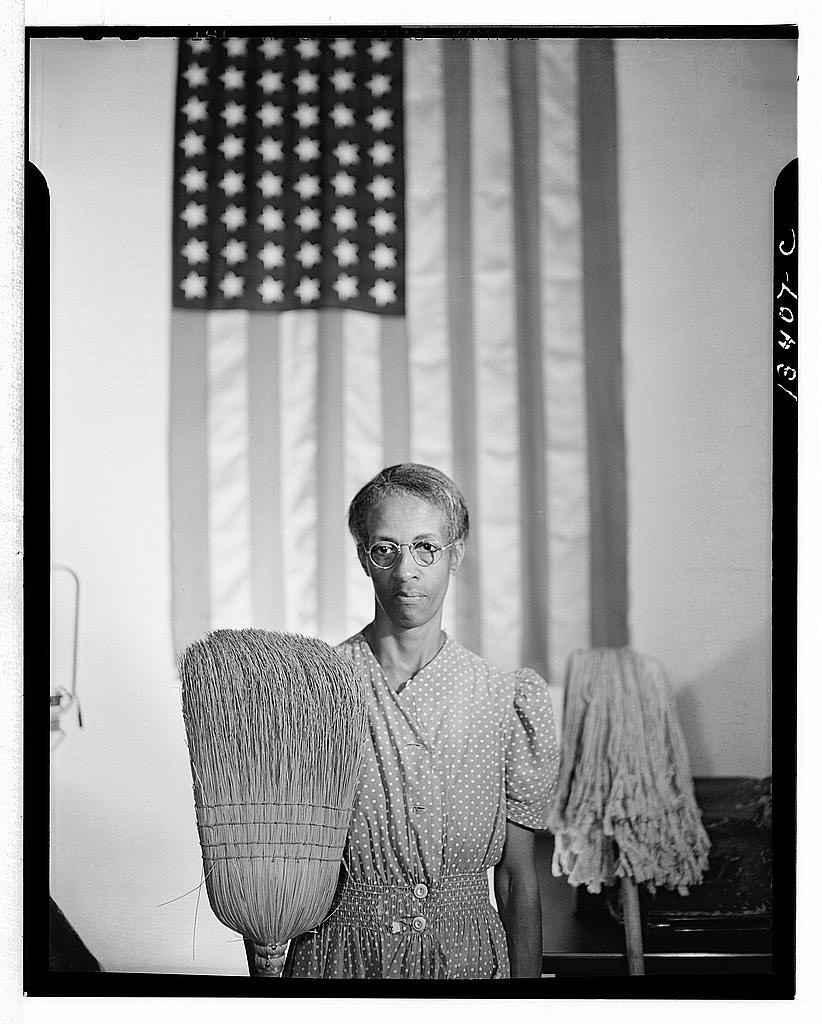
The Library of Congress has been working through a vast project to digitize the Farm Security Administration's Depression-era photographs at much higher resolution.
The collection includes images by Dorothea Lange, Walker Evans, Russell Lee and Gordon Parks.
These aren't simply better reproductions of familiar photographs.
The additional detail can reveal expressions, handwritten signs, clothing, objects and relationships within scenes that older reproductions made difficult to examine.
The project also opens up less familiar photographs, allowing researchers to explore the Depression through thousands of individual experiences rather than a handful of iconic images.
Original conceptual illustration of Route 198 dividing Delaware Park; not an archival photograph or a geographically precise map. Historical context: The Public.
Buffalo's long-running debate over Route 198 is becoming a dispute about who gets to determine the project's future.
Mayor Sean Ryan wants the city to take the lead in transforming the Scajaquada Expressway, which has divided Delaware Park and surrounding neighborhoods for decades.
The competing visions extend well beyond lowering the speed limit.
Advocates want a road designed around the park and its surrounding communities, with better pedestrian and bicycle connections, safer crossings and less of the physical barrier created by the expressway.
The question is whether state transportation priorities will continue to determine the project's timetable or whether Buffalo can direct the planning.
What matters next: A formal decision on project leadership, funding for design and environmental review, and a credible timetable for actual improvements.
Another rendering won't be enough.
The latest report raises the governance question; the project's status still needs confirmation from the city and state before treating a change in leadership as settled.
The state has tied the next Scajaquada study to completion of the Kensington Expressway’s environmental review. Advocates worry that dependency could push Route 198 planning into late 2028.
Buffalo has sought $56 million for design and environmental review, while advocates question why approximately $100 million previously associated with the corridor has moved into an illustrative rather than committed category of regional planning.
Tribal historic preservation groups warn that proposed federal permitting changes could shorten Section 106 reviews and weaken consultation over sacred places, burial grounds and cultural landscapes. Supporters say faster approvals would help build infrastructure; critics worry tribes would have less influence before construction begins.
Vox's first dedicated app brings its video, podcasts and articles into one product.
The interesting decision is how the material is divided: Users can watch and listen without subscribing, while written articles require payment.
That's a test of whether audiences developed through podcasts and video can become paying readers—and whether a direct relationship with a publisher is more valuable than another encounter on an outside platform.
It also raises a question for news organizations investing heavily in personality-driven video:
Are those audiences becoming attached to the publisher, or primarily to the personalities and platforms where they encounter the work?
The experiment deserves attention because it reverses the usual assumption that articles should attract audiences to a publisher's podcasts and video. Vox is testing whether the audience for its free audio and video can support a paid written product.
Daniel Shailer · Columbia Journalism Review · October 27
Nine miles from the Russian border, a seven-person newsroom has become a refuge for journalists who fled Russia after criticizing the invasion of Ukraine.
The Barents Observer has investigated arrests, political repression and Russian officials while sustaining itself through grants, donations and partnerships.
One of its reporters, Olesia Krivtsova, fled house arrest as a teenager and was sentenced in absentia this summer to six years in prison.
Shailer's feature is particularly good on how the newsroom survived its own struggle for editorial independence. Its founders initially worked without salaries, relied on donated office space and published through a mobile-phone hotspot.
The publication's geographic position gives it unusual access to a region that is increasingly difficult for independent journalists to cover.
Why it's worth reading: It's a compelling account of a tiny regional newsroom doing journalism with international consequences.
The Brewers were three outs from their first World Series championship Tuesday. Instead, Tampa Bay forced a fifth game with a remarkable 4–3 victory in 12 innings.
The Rays had already come back to tie the game when Milwaukee's Cooper Pratt homered in the top of the 12th. Tampa Bay answered with a rally that ended on Ben Williamson's winning single.
The victory gave the Rays another night. It also created an immediate problem.
Tampa Bay Won The Game It Had To Win. Now Who Pitches?
Manager Kevin Cash used seven pitchers Tuesday, including Nick Martinez, who had been a candidate to start Game 5.
Milwaukee, meanwhile, has Jacob Misiorowski ready. The Rays have since named Drew Rasmussen to start on three days’ rest.
The hard-throwing right-hander is a leading National League Cy Young Award contender, although his postseason outings have been less overpowering than his regular-season reputation suggests. In Game 1, he allowed one run in five innings but struck out only three batters.
Patrick Dubuque's Baseball Prospectus preview makes the matchup especially interesting: Milwaukee has a defined starter; Tampa Bay may have to improvise its way through nine innings.
The Rays' best chance may be to force Misiorowski into long at-bats, exploit his occasional command problems and get into Milwaukee's bullpen before the Brewers can establish control.
The Brewers' opportunity is to finish the Series before the Rays' dramatic escape becomes something more consequential.
The Milwaukee Art Museum and the Museum of Fine Arts in St. Petersburg have made a wager: The museum in the losing team's city will lend the winner a Monet painting.
Both paintings belong to Monet's London series. The arrangement could temporarily reunite works created during the same period.
It's a delightful collision of baseball, civic pride and art history—and exactly the kind of World Series sidebar worth including.
A major new study estimates that 74.5% of former NFL players who died between 2008 and 2023 had chronic traumatic encephalopathy, the degenerative brain disease associated with repeated impacts to the head.
The researchers examined records for 2,362 deceased former NFL players, including 396 brain donors. Among donated brains with completed neuropathological evaluations, 93.5% showed evidence of CTE.
That donor figure is not a population estimate: Families concerned about cognitive problems are more likely to donate a brain for examination. Researchers modeled that selection bias to estimate prevalence across deceased former players at 74.5%; their most conservative sensitivity analysis produced 63.7%.
The study separately estimated that 27.2% had experienced dementia during life. CTE pathology does not necessarily mean dementia, and the statistical estimates cannot be applied directly to living NFL players.
The important advance is methodological. The research strengthens the argument that selection bias alone cannot explain the high prevalence found in donated brains, while leaving important uncertainty about players today.
Next: Ravens at Bills · Sunday, November 1 · 1 p.m. ET
Sunday's edition examined Buffalo's pass-defense metrics and the changes to its coverage scheme. The fresher question is what the Bills can actually change after the bye—and which assignments must work against a quarterback who can break ordinary coverage rules.
The personnel puzzle
Chris Trapasso's October 26 reset examines the return of veteran receiver DJ Moore and choices facing Buffalo on both sides of the ball. Having Moore available could give Josh Allen another productive route runner against Baltimore and potentially help the offense sustain drives rather than returning its defense quickly to the field.
Defensively, Cole Bishop has grown important to coverage communication and tackling. Damar Hamlin's natural safety role and the availability of experienced defensive backs matter as Buffalo adjusts to injuries and C.J. Gardner-Johnson's suspension. The central task is keeping assignments clear against motion and run-action.
What the film shows
Cover 1's original film work isolates hesitation in the secondary, simulated pressure and missed run fits. But the analysts also identify successful coverage handoffs. That distinction matters more than a broad demand to blitz more: additional disguise may trouble opposing quarterbacks, but can create confusion if Buffalo's own defenders fail to coordinate.
GO DEEPER · ORIGINAL FILM AND A NEWER REPORT
The film studies show specific communication problems and positive snaps. Trapasso's October 26 analysis adds a forward-looking view of Ravens preparation and personnel decisions.
Lamar Jackson's mobility can punish a rush that opens escape lanes, while Derrick Henry demands gap discipline even when linebackers must account for play-action. Zay Flowers adds the route-running threat: zone defenders cannot afford late handoffs when Jackson extends the play.
That leaves Jim Leonhard with a trade-off. Disguise may force Jackson to hesitate, but only if Buffalo executes without missed assignments. Simpler responsibilities aid communication but make the scheme easier to diagnose. The question is which balance Buffalo can sustain under pressure.
What to watch
Ed Oliver's potential availability affects how much pressure Buffalo can create without extra rushers. Moore's return could strengthen the passing game against pressure. In the secondary, the post-bye decisions matter less than whether the Bills stop repeating breakdowns late in games. Any roster development reported after this edition's noon cutoff belongs in a later update.
IN THE CREASERegular season through Oct. 28 · GP = games played
COLTEN ELLIS.902Save percentage
2.28 GAA4 GP1 SO
UKKO-PEKKA LUUKKONEN.866Save percentage
3.56 GAA9 GP0 SO
Ellis's stronger results come in only four appearances. The split is meaningful enough to raise a question about starts, not enough to settle it — and team defense affects both lines.
Colten Ellis hadn't started since October 12, when Florida chased him from the net. Buffalo had lost six of its previous eight games.
He returned Tuesday with a 23-save shutout.
But the more encouraging development was the way Buffalo played in front of him.
Ellis made the difficult saves
The 26-year-old was especially sharp when San Jose created chances near the crease.
He robbed Collin Graf late in the second period and denied Kiefer Sherwood from close range with just over four minutes remaining.
Those were the kinds of saves Buffalo has too often needed—and too often failed to get—during uneven stretches.
Ellis now has two NHL shutouts.
The goaltending question: With Ukko-Pekka Luukkonen inconsistent and Alex Lyon returning from injury, has Ellis earned a larger share of the starts?
A more complete defensive effort
Buffalo outshot San Jose 40–23 and blocked 20 shots.
The second period was particularly impressive: The Sabres held the Sharks to four shots while generating 14 of their own.
Mattias Samuelsson and Owen Power each blocked four shots.
Ellis still had to make important saves, but Buffalo generally gave him a more manageable game than its recent defensive performances suggested was likely.
Zellweger is becoming indispensable
Zellweger opened the scoring 50 seconds into the second period, finishing a rush with a wrist shot past Yaroslav Askarov.
He logged 21:34 of ice time and generated six shot attempts.
The Sabres outshot San Jose 16–4 at five-on-five while he was on the ice, according to the independent analysis from The Hockey Writers.
His partnership with Power is becoming increasingly important following Bowen Byram's departure.
And his three-year, $9.3 million contract is beginning to look like a potentially excellent value.
Making this performance a pattern
Buffalo still has work to do on the power play, and one shutout against San Jose doesn't resolve its defensive problems.
But this was a meaningful response to a difficult stretch.
The Sabres generated sustained offensive pressure, protected the middle of the ice more effectively and received excellent goaltending when mistakes occurred.
The next test is Anaheim on Thursday. Another disciplined performance would make Tuesday look less like an isolated recovery and more like the beginning of something sustainable.
Global Lacrosse Games · December 8–13 · Springfield, Virginia
Lyle Thompson and Zed Williams headline the Haudenosaunee men's roster for the inaugural Global Lacrosse Games, which will feature the sixes format planned for the 2028 Los Angeles Olympics.
The tournament will bring together the Haudenosaunee, United States, Canada and Australia.
The roster also includes Nonkon Thompson, Kyle Jackson and Jake Piseno, with John Tavares and Darris Kilgour coaching.
Canada's roster includes Buffalo Bandits stars Dhane Smith and Josh Byrne, along with Syracuse alumnus Owen Hiltz.
The Olympic Challenge
The Haudenosaunee are full members of World Lacrosse and have competed internationally for decades.
But Olympic participation generally depends on recognition through a national Olympic committee.
The United States and Canadian governments have supported an exception for the Haudenosaunee. The International Olympic Committee has not resolved the issue.
And recognition would not automatically mean qualification: Only six men's teams will compete in Los Angeles.
The Global Lacrosse Games therefore matter for two reasons. They offer high-level preparation in the Olympic format while keeping attention on the Haudenosaunee effort to compete in the Games.
Season opener: Monday, November 2 · New Haven at Syracuse
Gerry McNamara's first Syracuse team finished its exhibition schedule 2–1, closing with a 71–58 victory over Niagara.
The results were encouraging in places, but the final exhibition exposed questions about the rotation and the offense.
Point guard: Ryan Moesch played more minutes than Garwey Dual against Niagara and contributed nine points, six assists and four steals. His energy gives McNamara an appealing option, while Dual offers defensive tools the team may need.
Sadiq White Jr.: Foul trouble limited him to eight minutes against Niagara. Syracuse needs his athleticism and rebounding, but he has to stay on the floor.
Kiyan Anthony: A 2-for-16 exhibition shooting performance raises questions about how Syracuse can create better opportunities for him without disrupting the offense.
Defense: The Orange have length and athleticism, but they forced only nine turnovers against Niagara and haven't consistently sustained their intensity.
Aiden Tobiason's hamstring injury also limited McNamara's ability to evaluate his full rotation.
The immediate challenge is less about identifying the team's ceiling than establishing dependable combinations.
What to watch Monday: The starting backcourt, White's minutes, Anthony's shot selection and whether Syracuse can maintain defensive pressure without extended lapses.
Game 6 · Thursday, 12:30 p.m. ET · USA / Peacock · Valkyries at Dream
The Valkyries lead Atlanta 3–2 after holding the Dream to 55 points in Game 5.
Kiah Stokes has anchored Golden State's interior defense, while Veronica Burton has contributed disruptive perimeter play.
Natalie Nakase's lineup adjustments, including greater responsibility for Tiffany Hayes and Kaila Charles, helped reverse the series after Golden State fell behind 2–1.
The Dream must find a way to create more efficient scoring opportunities, particularly around the basket, where Stokes has repeatedly altered shots.
A Golden State victory would deliver a championship in the franchise's second season.
Congress's attempt to stabilize college athletics has exposed a fundamental disagreement within the ACC: how to impose common rules without trapping schools in a growing financial disadvantage. Ross Dellenger's reporting on the Protect College Sports Act, conference leaders' contingency plans and Miami's objections describes connected parts of the same fight.
The bill and a conference-level Plan B
The Senate passed the Protect College Sports Act on September 28, but it still needs House approval. It would regulate athlete compensation, eligibility and transfers, allow voluntary pooling of football television rights and restrict movement among the largest conferences.
As Dellenger reported, conference leaders are also working on a Plan B: adopting some of the same compensation and governance rules at the league level if federal legislation stalls. That is an alternative route toward the same goal, not an unrelated challenge.
For the ACC, the unresolved question is whether any such framework would narrow the financial and governing-power gap with the Big Ten and SEC—or merely make it harder for the league's most ambitious members to seek richer alternatives.
Why some ACC schools want the realignment rules changed
Miami president Joe Echevarria objects to provisions that would cap power-conference membership at 20 schools and require a university switching between major leagues to spend three years as an independent. Miami, Florida State, Clemson and North Carolina have asked House leaders to loosen those restrictions, even as other ACC schools support the legislation.
Echevarria has raised football independence as a possible response, despite the scheduling difficulties it would create for Miami's other sports. His argument is inseparable from the ACC's revenue disadvantage: a stability measure designed to curb realignment could also constrain schools that believe they need more lucrative options.
The Syracuse angle: Lasting ACC stability depends not just on making departures more difficult, but on giving members compelling financial and competitive reasons to stay.
Luke Fletcher’s analysis considers whether the ACC should preserve its current membership or expand toward 18 schools as protection against departures. Changes proposed in September would raise the power-conference membership cap to 20 and reduce the proposed independence period for schools switching conferences.
Those provisions are not law. But they illustrate why Syracuse’s future depends on more than football: Television revenue, basketball competitiveness and Olympic-sports resources are all bound up in long-term conference stability.
A Canadian study found that 75 percent of respondents identify as fans of women's professional sports, while 62 percent say they struggle to find the games or content they want.
The findings suggest that the growth of women's sports depends not only on generating interest, but on making broadcasts and schedules easier to discover.
Major investigations involving Manchester City, gambling and the Los Angeles Clippers underscore how ambitious sports reporting remains essential even as traditional sports departments shrink.
Qwan’tez Stiggers left college after his father’s death to help his family. His unlikely path to the NFL led through Fan Controlled Football and the Canadian Football League before the Jets drafted him in 2024.
Alex Freeman scored his first La Liga goal for Villarreal while playing three different positions—versatility that could make him increasingly important to the U.S. national team.
The Nerves · Archival promotional photograph via San Francisco Chronicle
The Nerves were together only briefly, but their influence reached far beyond their modest commercial success.
The power-pop trio of Jack Lee, Peter Case and Paul Collins rehearsed relentlessly, released its own records and toured without major-label backing.
The trio funded recordings themselves and crossed the country in a station wagon, playing to audiences that often had little idea what to expect. Their rehearsals were relentless, their arrangements economical and their work ethic extraordinary.
Lee wrote “Hanging on the Telephone,” which Blondie later turned into a hit.
Blondie’s recording on Parallel Lines in 1978 gave Lee an enduring piece of pop history, while leaving his original band largely unknown.
A new anthology from Third Man Records is bringing the group's music back into circulation, including archival material recovered after Lee's death.
There's a Western New York connection: Case grew up in Buffalo before moving west.
After the band broke up, Case formed the Plimsouls and pursued a solo career rooted in folk, blues and rock; Collins formed the Beat; and Lee continued writing songs for other artists.
The story is an excellent account of how a band can help shape a musical movement without becoming a household name.
Turner Classic Movies has spent more than three decades cultivating something increasingly rare in television: an audience that trusts its human programmers.
Now its future is uncertain following Paramount Skydance's acquisition of Warner Bros. Discovery.
The concern isn't simply that executives might eliminate a relatively small cable channel. It's that TCM's distinctive value—uncut films, knowledgeable hosts, imaginative programming and an audience that genuinely cares about film history—doesn't fit neatly into the economics of a heavily indebted entertainment conglomerate.
The story recalls the 2023 layoffs that prompted Martin Scorsese, Steven Spielberg and Paul Thomas Anderson to intervene on the channel's behalf.
It also contains a revealing detail about the appetite for old movies: A recent 10 a.m. screening of the 1930 film The Divorcee attracted nearly 500 people.
Why it's worth reading: It's about the future of film preservation and cultural curation, not merely the fate of another cable channel.
Three productions that began in London—2:22, A Ghost in Your Ear and Paranormal Activity—are bringing a wave of theatrical horror to New York.
The most interesting aspect isn't the genre itself. It's the audience.
The productions are attracting people who may not otherwise be regular theatergoers, partly by embracing an experience that traditional theater etiquette often discourages: audiences screaming, reacting and making noise together.
A Ghost in Your Ear uses headphones to create an intimate, unsettling experience. Paranormal Activity has become a commercial success on Broadway, extending its run after generating more than $8 million.
The larger question is whether theater can attract new audiences by offering something movies and streaming cannot: a genuinely shared, unpredictable experience.
A detail worth noting: The original Paranormal Activity film is getting a Halloween screening at the August Wilson Theatre, where the stage adaptation is running.
Cartman, Kenny, Stan and Kyle head into a dispute over South American beef, which has become an unexpectedly valuable commodity.
The boys attempt to keep it under local control.
The premise sounds like fertile ground for South Park's familiar combination of political satire, economic absurdity and increasingly elaborate schemes.
The episode streams Thursday on Paramount+. Additional new episodes are scheduled for November 11 and 25.
More Country Music From the 12 Golden Country Greats Sessions
Ween's expanded 12 Golden Country Greats has already brought a substantial collection of archival recordings back into circulation.
Now comes Golden Wastes, a four-track EP of additional material from those sessions.
The release includes previously unheard recordings and alternate mixes that illuminate the group's improbable but musically serious excursion into Nashville country.
Dusty Hayes's review at Post-Trash is worth reading for its attention to the tension between Ween's humor and the musicianship underlying the project.
Journalist Jamie Fisher interviewed 140 people for Nobody Broke Your Heart, her biography of Elliott Smith.
Her challenge was to write about an artist whose death has often overshadowed his work—and to avoid reducing a complicated life to a familiar tragic narrative.
One of her most interesting editorial decisions was to write the chapter about Smith's childhood last.
She wanted to gather enough evidence to evaluate conflicting memories and sensitive family accounts before deciding how to present them.
The interview and annotated chapter examine how Fisher organized an enormous body of reporting, assessed the reliability of recollections and handled subjects who had their own complicated relationships with Smith.
It's a particularly rewarding combination of music writing, biography and journalism craft.
And it illustrates something important about ambitious nonfiction:
The hardest part isn't always finding the material. It's deciding what the evidence allows you to say.

 vs